A customs cargo GPS e-lock connects physical locking with location and lock-event reporting. TOPFLYtech SolarGuardX 110 combines solar charging, GNSS positioning and cellular communication, and reports locking, unlocking and rope-cutting events to a server. For a vehicle with several doors, evaluate the main lock and proposed BLE sub-locks as one configured system. Confirm the device combination, firmware and platform functions before deployment; BLE support alone does not prove compatibility or successful group unlocking.
How does a main GPS e-lock work with BLE sub-locks?
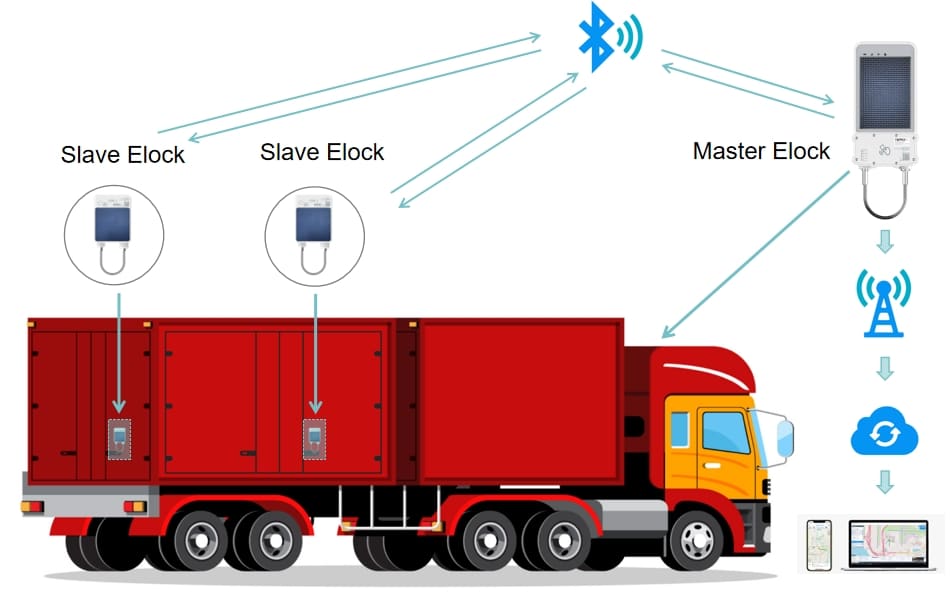
A main GPS e-lock provides location and a cellular communication path. Compatible BLE sub-locks can add locking points on the same truck, trailer or cargo compartment layout. The selected hardware, firmware and platform determine which sub-lock states, events and commands can pass through the main unit.
The main unit’s position must not be presented as an independently measured position for each BLE sub-lock. A lost BLE link and a lost cellular connection are also different conditions. Check how the proposed system identifies each condition and what information remains available to operators.
When should a customs operator choose BLE sub-locks instead of standalone GPS locks?
Consider a main-lock and BLE sub-lock configuration when the access points stay together on one asset and the local links pass field testing. Consider independently connected devices when assets separate or each device needs its own reporting path.
| Operating condition | Configuration to assess | Evidence needed |
|---|---|---|
| Several doors remain on the same vehicle | Main GPS e-lock with compatible BLE sub-locks | Confirmed compatibility and reliable links at every intended mounting point |
| Containers or trailers separate during the trip | Independent cellular GPS devices for the separated assets | Reporting after separation, route coverage and an appropriate power plan |
| Tracking must continue after the main lock is removed | A separate asset-tracking device where required | A demonstrated reporting path independent of the removed lock |
On narrow screens, scroll the table horizontally to read all columns.
Use the SolarGuardX GPS e-lock selection guide for model roles and connectivity options. Compare installation, subscriptions, charging, inspections and replacement effort before drawing a cost conclusion.
What should be tested around metal cargo compartments?
Test BLE communication on the intended vehicle with the doors and cargo in representative operating states. A bench demonstration or an open-field range figure does not establish performance behind metal partitions.
- Mounting and loading: test each intended position with doors open and closed, and with representative loads. Record the positions, cargo layout and unsuccessful communications.
- Normal and exception events: where supported, test status requests, authorized commands and tamper-related events. Check that each record identifies the correct device and access point.
- Connection loss: test a lost BLE link separately from unavailable cellular service. Verify whether and how the configured system detects each condition, records information locally and recovers after reconnection.
- Power and environment: repeat relevant checks under the expected temperature, reporting frequency and charging conditions. Solar charging depends on the installation and available light.
Agree the required read success, event delivery, recovery and battery criteria before the pilot. Save the measured results with device and firmware versions. Do not replace those results with a generic range or battery-life promise.
Does sending a group unlock command confirm that every lock has opened?
No. Sending a group unlock command requests an operation; it does not by itself confirm each lock’s resulting state. The evaluation should distinguish three separate observations:
- Command acknowledgement: which component accepted the request, which devices it targeted and whether any acknowledgement remains outstanding.
- Individual lock state: the latest reported state of each targeted lock, including the time and any timeout or failure indication.
- Physical door state: separate door-sensor evidence or an agreed inspection when the operation requires confirmation that a door actually opened.
Treat a missing or stale status as unconfirmed, not as an unlocked door. Ask the platform supplier to demonstrate partial failure and reconnection. These are system acceptance questions, not a statement that every SolarGuardX configuration implements the same controls.
A customs transit workflow to validate
Agree the workflow with the operator, integrator and relevant project stakeholders before live use. Validate the following stages on the proposed configuration:
- Before departure: associate device IDs and access points with the correct vehicle and consignment reference. Inspect closure, check reported states, confirm communication and assign responsibility for exceptions.
- During transit: verify the available location, lock and connection records. Test the agreed response to a communication gap or unexpected event, including escalation and records after recovery.
- At arrival: confirm the authorized release process, check each required device state and reconcile the available events with the consignment. Record unresolved exceptions before closing the trip.
What evidence should a cargo-lock supplier provide?
A useful supplier assessment connects a product to a documented configuration and test record. For a proposed TOPFLYtech SolarGuardX 110 project, request:
- A compatibility record covering main-lock and sub-lock models, supported device count, firmware versions and platform version.
- Protocol documentation or sample messages showing the supported states, commands, timestamps and failure handling.
- A demonstrated authorization process, including which controls belong to the device, application or tracking platform.
- Route-connectivity and power evidence for the proposed deployment, plus verified behavior during connection loss.
- Relevant certification documents identifying the exact model, version and scope. Assess project-specific acceptance separately from general product certification.
- A pilot report recording the installation, test conditions, agreed pass criteria, exceptions and operational sign-off.
For the wider monitoring design, read how cargo security monitoring connects location, lock and door information. For an ECTS project, use the GPS e-lock solution for customs cargo supervision, then request a deployment assessment from TOPFLYtech with the route, vehicle layout, access points and existing platform.
By TOPFLYtech. This guide covers cargo-lock selection and deployment checks; project acceptance remains specific to the proposed configuration.