As of September 16, 2026, SolarGuardX 110 has completed assessment against EN 18031-1:2024 and EN 18031-2:2024. The assessment is supported by test reports and a Verification of Conformity (VoC) issued by Sushi TOWE Wireless Testing (Shenzhen) Co., Ltd. For European distributors, integrators and cargo-security project teams, the documents provide model-specific evidence for reviewing network-security and data-protection requirements that apply to connected radio equipment.
The exact wording matters. SolarGuardX 110 EN 18031 documentation should be described as test reports and a VoC covering EN 18031-1 and EN 18031-2. It should not be presented as an EU authority approval, proof that an entire tracking platform is secure, or confirmation of future Cyber Resilience Act compliance.
What do EN 18031-1 and EN 18031-2 cover?
EN 18031 is a three-part European cybersecurity standard series for radio equipment. The SolarGuardX 110 assessment covers the two parts relevant to an internet-connected tracking device that processes location and operational data.
| Standard | Official scope in plain language | Why it is relevant to SolarGuardX 110 |
|---|---|---|
| EN 18031-1:2024 | Common security requirements for internet-connected radio equipment. | SolarGuardX 110 uses cellular connectivity and exchanges information with remote systems. |
| EN 18031-2:2024 | Security requirements for radio equipment that processes personal, traffic or location data. | SolarGuardX 110 can process and transmit location, device-status and cargo-access event data. |
| EN 18031-3:2024 | Requirements for internet-connected radio equipment that processes virtual money or monetary value. | This part is not included in the stated SolarGuardX 110 assessment scope. |
The European standards body CEN-CENELEC provides an official overview of all three EN 18031 parts. The standards are also cited, with specific notices, in Commission Implementing Decision (EU) 2025/138.
Why does EN 18031 matter for a connected cargo GPS e-lock?
A connected cargo e-lock handles more than a lock state. SolarGuardX 110 can communicate over a cellular network, report GNSS location, receive authorized commands and send events such as locking, unlocking or rope cutting to a tracking platform. These connected functions create security questions that do not exist with a mechanical seal.
For a logistics operator, the practical questions include who can send a command, how the device and platform exchange data, how software changes are controlled, and how access to location records is managed. EN 18031 assessment gives procurement and engineering teams a structured document set for reviewing the device side of those questions.
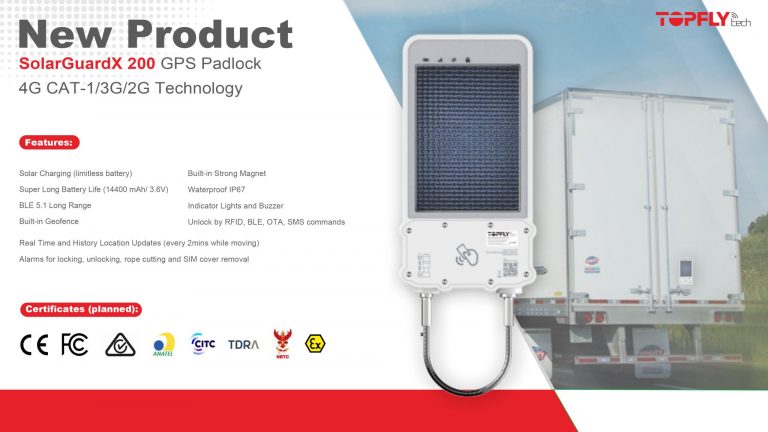
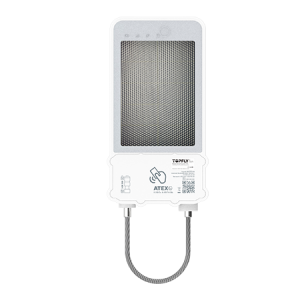
SolarGuardX 110 uses LTE Cat-1 with 2G connectivity and supports BLE accessories. Buyers can review its verified product functions on the official SolarGuardX 110 product page.
What does the SolarGuardX 110 assessment mean for European buyers?
The SolarGuardX 110 test reports and VoC give European buyers additional evidence during product selection and technical-file review. The documents can help a distributor or integrator trace the assessed product to named standards, ask better security questions and reduce uncertainty during project approval.
| Buyer task | How the documents help | What still needs project review |
|---|---|---|
| Product qualification | Identify the assessed model and applicable EN 18031 parts. | Hardware version, firmware version and market-specific configuration. |
| Technical documentation | Add the test reports and VoC to the product evidence set. | Declaration of Conformity, user documentation and any project-specific records. |
| Solution security | Review device-level assessment findings against project requirements. | Platform accounts, APIs, SIM management, operator procedures and data governance. |
What does a test report and VoC not prove?
The EN 18031 documents do not make every deployment secure by default. A tracking solution also depends on the platform, connectivity service, user permissions, API configuration, installation practice and operating procedures.
- A VoC is not the same as approval by an EU institution.
- Device assessment does not certify a third-party tracking platform.
- Assessment of one product configuration should not automatically be applied to another model, hardware revision or firmware branch.
- EN 18031-1 and EN 18031-2 do not cover payment or virtual-money processing under EN 18031-3.
- Current EN 18031 evidence should not be marketed as complete future compliance with the EU Cyber Resilience Act.
How should distributors and integrators use the EN 18031 documents?
Distributors and integrators should use the SolarGuardX 110 reports and VoC as part of a controlled product-evidence package. The following checks make the documents more useful during procurement and deployment.
- Match the model. Confirm that the product name, model number and applicable variant match the units being supplied.
- Check document identity. Record the report numbers, revision status, issuing organization and issue date.
- Confirm configuration scope. Verify the hardware and firmware configuration covered by the reports.
- Keep related compliance records together. Store the VoC, test reports, Declaration of Conformity, installation guidance and relevant security documentation in the same controlled file set.
- Review the full solution. Assess platform authentication, user roles, command permissions, API access, SIM administration, update procedures and data retention separately.
- Use precise sales language. State the standards and documents exactly. Avoid claims such as “EU approved” unless a separate authoritative document supports that wording.
Where does SolarGuardX 110 fit in cargo-security projects?
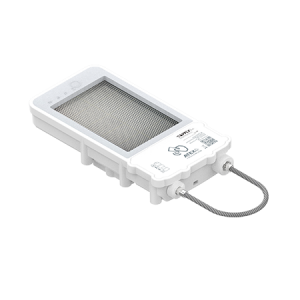
SolarGuardX 110 is designed for connected cargo-security applications where operators need location visibility together with lock-status and tamper-event reporting. Typical deployment discussions include containers, trailers, bonded transport, cross-border routes and refrigerated cargo.
For model selection across cellular technologies and system roles, see the SolarGuardX GPS e-lock comparison. Customs and bonded-transport teams can also review the electronic cargo tracking system workflow. Platform providers should confirm protocol, device-management and integration responsibilities through TOPFLYtech’s platform partner ecosystem.
How do RED cybersecurity requirements and the Cyber Resilience Act affect the timeline?
As of September 2026, the cybersecurity requirements activated under the EU Radio Equipment Directive remain applicable to relevant radio equipment. The European Commission states that Delegated Regulation (EU) 2022/30 entered into application in August 2025.
The European Commission has also published Delegated Regulation (EU) 2026/339, which will repeal the RED cybersecurity delegated regulation from December 11, 2027, when the main Cyber Resilience Act obligations apply. Buyers should therefore treat EN 18031 documentation as current RED evidence while planning separately for the product-lifecycle obligations introduced by the Cyber Resilience Act. The European Commission’s RED page provides the current transition summary.
This article provides product and standards information, not legal advice. The applicable conformity route depends on the product configuration, intended use, placing-on-the-market responsibilities and the complete technical documentation.
Frequently asked questions about SolarGuardX 110 and EN 18031
Has SolarGuardX 110 completed EN 18031 assessment?
Yes. SolarGuardX 110 has test reports and a Verification of Conformity covering EN 18031-1:2024 and EN 18031-2:2024, issued by Sushi TOWE Wireless Testing (Shenzhen) Co., Ltd. on September 16, 2026.
Does the SolarGuardX 110 assessment include EN 18031-3?
No. The stated SolarGuardX 110 assessment covers EN 18031-1 and EN 18031-2. EN 18031-3 concerns internet-connected radio equipment that processes virtual money or monetary value and is not part of the stated document scope.
Does the VoC certify the entire tracking solution?
No. The VoC and test reports relate to the assessed SolarGuardX 110 product scope. A complete deployment also depends on the tracking platform, connectivity, account security, API controls, installation and operating procedures.
What documents should a European buyer request?
A European buyer should request the applicable test reports, VoC, Declaration of Conformity, model and version details, user documentation and any security guidance needed for the intended deployment. The buyer should also verify that the supplied configuration matches the assessed configuration.
Does EN 18031 assessment mean SolarGuardX 110 is fully compliant with the Cyber Resilience Act?
No. EN 18031 assessment supports the current RED cybersecurity evaluation, but it should not be presented as complete Cyber Resilience Act compliance. The Cyber Resilience Act introduces broader product-lifecycle obligations that require separate preparation.
Request the applicable SolarGuardX 110 documentation
European distributors, integrators and project operators can contact TOPFLYtech to confirm the applicable SolarGuardX 110 variant and request the relevant EN 18031 test reports and VoC for technical review.