WiFi positioning becomes interesting precisely when GPS stops being dependable. That usually happens in the places operations teams care about most: warehouses, underground parking areas, dense urban blocks, cargo hubs, mixed indoor/outdoor workflows, and low-power tracking deployments where GPS cannot stay active all the time.
So the value of WiFi positioning is not that it replaces GPS. It is that it helps keep location data alive when GPS becomes intermittent, expensive, or unavailable. For many real deployments, that continuity matters more than perfect map precision.
Why GPS Fails in Indoor and Urban Environments
GPS works best when the sky is clear and the device has enough power budget to keep the signal active. In real operations, those assumptions often break down.
Common gap scenarios include:
- Indoor or semi-indoor movement: warehouses, transfer centers, loading bays, malls, and garages weaken satellite visibility.
- Dense city coverage: tall buildings, reflected signals, and narrow streets reduce reliability.
- Battery-sensitive deployments: many compact trackers cannot afford to keep GPS active continuously just to preserve location continuity.
- Operational handoffs: assets often move between outdoor travel and indoor dwell periods where one positioning method alone is not enough.
This is why mixed-environment tracking is usually a fallback-stack problem rather than a single-signal problem.

What Is WiFi Positioning and How Does It Work?
In simple terms, WiFi positioning uses nearby access-point data to estimate location when satellite coverage is weak or missing. It does not promise the same role as GPS. Its practical job is to reduce blind spots.
That makes WiFi especially useful when the operator values:
- location continuity over perfect pinpoint precision,
- better visibility in urban and indoor-adjacent environments,
- lower power consumption than a GPS-only strategy,
- and a more reliable handoff between outdoor and indoor tracking conditions.
Used correctly, WiFi positioning becomes part of a layered logic: GPS where sky access is good, LBS when coarse fallback is enough, and WiFi where the environment offers enough access-point density to improve continuity.
If you are comparing the broader fallback question, LBS vs GPS Accuracy is a useful companion piece because it frames why different positioning methods solve different operational problems.
When WiFi Positioning Is Better Than GPS (Real Use Cases)
WiFi positioning is most useful in environments where the asset or person repeatedly moves through mixed conditions rather than staying exclusively outdoors.
Typical examples include:
- people safety and mobile workforce tracking in campuses, cities, and active field operations,
- parcel and mobile asset workflows that pass through depots, buildings, and transfer hubs,
- urban operations where tall structures or indoor dwell time create recurring GPS gaps.
That is why WiFi positioning often makes more sense in devices like KnightX 100 or parcel-oriented setups such as CyberLabelX 100, rather than in every tracking category by default. The technology matters most when the deployment itself has a mixed-environment visibility problem to solve.
What to Consider Before Using WiFi Positioning for Tracking
Buyers usually get better results when they assess WiFi positioning in context rather than as a standalone specification.
- Access-point density: the more stable and recognizable the surrounding WiFi environment, the more useful the positioning layer tends to be.
- Movement pattern: if the tracked object spends meaningful time in warehouses, campuses, stores, or urban interiors, WiFi has more practical value.
- Power budget: in battery-sensitive deployments, fallback logic often matters as much as raw GPS performance.
- Tolerance for approximate location: if the operation needs “close enough and available now,” WiFi can be very helpful. If it requires exact outdoor-grade precision at all times, WiFi is not the answer on its own.
That is also why WiFi positioning should be treated as part of a system design decision, not as a magic accuracy claim.
How Topflytech Combines GPS + WiFi + LBS
For TOPFLYtech, the strongest fit is usually in solutions where continuity matters more than a single-signal purity test. That includes People Tracking for Seniors, Children & Outdoor Staff and Parcel Tracking Solution, where mixed movement patterns and lower-maintenance tracking logic can matter more than chasing perfect GPS-only behavior.
It is also why a modern positioning discussion should not stop at “GPS versus WiFi.” In many deployments, the better question is: what fallback mix keeps the operational picture usable when the environment changes?
For readers who want a second angle on that question, How can LBS and WIFI Positioning enhance tracking experience? is another helpful reference inside the same topic area.
Key Advantages and Limitations of WiFi Positioning
WiFi positioning is not a replacement for GPS. It is a continuity layer. When it is matched to the right environment, it reduces blind spots, protects battery budget, and keeps the location story from going dark the moment the tracked asset enters a more difficult space.
That is why teams planning mixed-environment tracking should evaluate positioning as a stack, not as a single winner-takes-all technology choice.
How to Choose the Right Tracking Solution (GPS vs WiFi vs LBS)
If your use case is person safety or active field visibility, start with KnightX 100 and the People Tracking solution path. If the challenge is parcel visibility through hubs and buildings, review CyberLabelX 100 and the Parcel Tracking Solution. And if you want help deciding which fallback stack fits your environment, contact TOPFLYtech for a more deployment-specific recommendation.
FAQ
1️⃣ How accurate is WiFi positioning compared to GPS?
WiFi positioning is generally less accurate than GPS in open outdoor environments but performs better indoors or in dense urban areas where GPS signals are weak. Typical WiFi accuracy ranges from 10 to 30 meters depending on network density.
2️⃣ Does WiFi positioning work without internet?
WiFi positioning can work without active internet access if the device has access to a local database of WiFi networks. However, real-time positioning usually requires connectivity to update location data.
3️⃣ Can WiFi tracking work indoors?
Yes, WiFi tracking is particularly effective indoors where GPS signals cannot reach. It uses nearby WiFi access points to estimate location, making it ideal for warehouses, buildings, and urban environments.
4️⃣ What is WiFi triangulation?
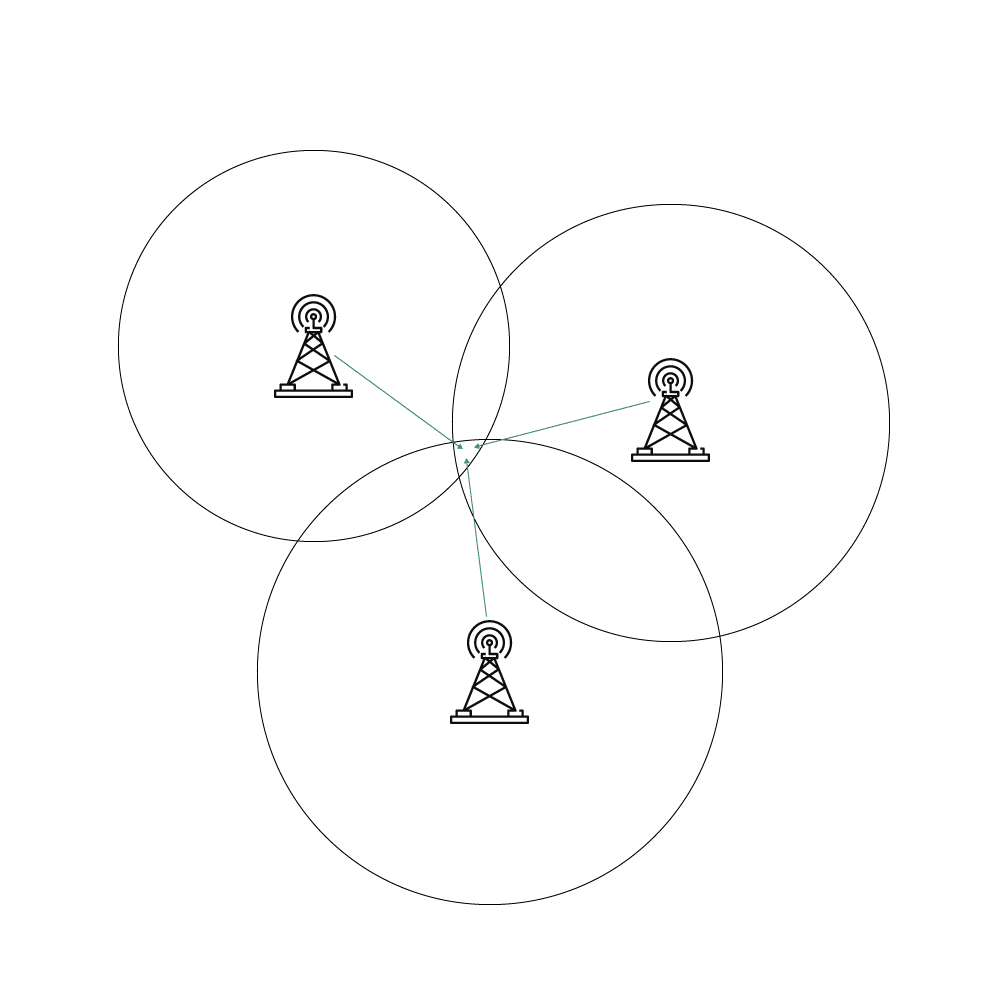
WiFi triangulation is a positioning method that estimates a device’s location by measuring signal strength from multiple WiFi access points and calculating its relative position.
6️⃣ What is the difference between WiFi positioning and LBS tracking?
Check this article: How can LBS and WIFI Positioning enhance tracking experience? – TOPFLYtech