If your operation involves equipment deployed at remote job sites, container yards, agricultural fields, or anywhere without a reliable power source, battery maintenance on GPS trackers becomes its own logistics problem. A device that runs dead on a trailer parked in a field for three weeks isn’t a tracking solution — it’s an administrative burden. Solar-powered asset trackers solve that specific problem, but choosing the right one requires understanding what you’re actually buying and where the real value sits for your operation.
Why power supply is the central challenge in off-grid asset tracking
Most fleet managers focus their GPS tracker evaluations on features: geofencing, alert configurations, platform integrations. Power supply gets treated as a footnote. That’s a mistake, particularly for non-vehicle assets — trailers, containers, construction equipment, agricultural machinery — that sit stationary for extended periods or operate in locations without shore power access.
The core problem with battery-only trackers in these environments is that long reporting intervals are forced to preserve battery life, which means location data is stale by hours. Shorter intervals drain batteries faster, requiring more frequent physical retrieval and replacement — which defeats the purpose of remote monitoring for assets that are hard to access. For assets deployed across multiple sites or geographies, the maintenance overhead compounds quickly. You can run the numbers with the battery life calculator to see how different reporting intervals affect your real-world maintenance cycle.
Solar charging addresses this constraint by decoupling reporting frequency from battery longevity. When the panel can continuously top off the battery during daylight hours, a device can maintain hourly or sub-hourly reporting without the power budget tradeoff. The result: more granular location history, more reliable alert delivery, less battery-related downtime in your tracking data.
This matters most for equipment categories where undetected movement is the primary risk — construction equipment left at an unsecured job site overnight, trailers dropped at intermodal yards, portable generators deployed at infrastructure worksites.
The equipment theft context

Construction and heavy equipment theft is a persistent and underreported problem in North America. According to the National Equipment Register (NER) and the National Insurance Crime Bureau (NICB), theft of construction equipment costs the US industry an estimated $300 million to $1 billion annually, with an average per-incident loss around $30,000. Recovery rates are poor — fewer than 25% of stolen units are ever recovered, compared to roughly 60% for passenger vehicles. Over 60% of recovered stolen equipment had no recorded unique identifier, making ownership verification difficult for law enforcement.
The financial exposure from theft goes beyond the replacement cost: project schedule disruption, emergency rental equipment at premium rates, insurance premium increases, and the administrative burden of filing claims. For a mid-sized contractor, annual tool and small equipment replacement from theft and loss can become a significant line item.
GPS tracking doesn’t guarantee recovery, but it changes the probability calculus. Devices that maintain continuous location reporting — rather than dropping offline after a battery dies — are far more useful in the hours immediately following a theft, when law enforcement response is most actionable. A tracker that went dark three weeks ago because the battery ran out provides no data during the period that matters most. That’s the solar architecture argument in one sentence. See also: vehicle anti-theft solution overview and industrial asset hidden tracking for related approaches.
How solar GPS trackers work in field conditions
A solar-powered GPS tracker combines a photovoltaic panel — small enough to mount flush on a trailer roof or equipment housing — with a rechargeable lithium battery. The panel trickle-charges the battery during daylight hours, while the battery powers the device at night and through overcast periods. Most industrial-grade units are engineered to sustain normal reporting through at least several consecutive cloudy days on accumulated charge.
The quality variables that matter most in practice are panel efficiency and battery capacity (which determine how long the device sustains reporting during low-light periods), housing durability (IP67 or better is standard for outdoor industrial use), and network type. Network choice has real operational implications.
LTE Cat-1 provides higher bandwidth and works well for applications requiring frequent updates in areas with dense cellular coverage. LTE Cat-M1 (LTE-M) is a narrowband IoT variant optimized for low-power devices — it uses less energy per transmission and maintains better connectivity in signal-marginal environments, which is common at remote or semi-rural job sites. For assets that regularly operate outside urban coverage areas, Cat-M1 is typically the more reliable choice, even though its data throughput is lower.
Multi-constellation GNSS — combining GPS, GLONASS, BeiDou, and Galileo satellite signals — improves position fix reliability where signal blockage is an issue: equipment parked near large structures, canyon terrain, dense port facilities. For construction and logistics applications where single-constellation devices can struggle, this is a meaningful differentiator.
What fleet managers should evaluate
Asset type and deployment profile
A trailer sitting at an intermodal yard for weeks has very different requirements from a compact excavator moving between job sites every few days. The former benefits most from geofence-based alerts on a long reporting interval; the latter needs more frequent reporting and motion-detection triggers. Confirm that the device’s reporting logic is configurable rather than fixed.
Connectivity at the deployment location
Map your typical asset deployment locations against cellular coverage data from the relevant carrier networks before purchasing. Devices relying on Cat-M1 or NB-IoT will have different coverage profiles from standard 4G. For assets that regularly operate in true off-grid environments — remote agricultural land, mining areas, offshore infrastructure — satellite communication options should be evaluated separately, as terrestrial LTE networks won’t be sufficient.
Integration with your existing telematics platform
If you’re already running a fleet management system, confirm whether the hardware you’re evaluating supports the same platform or offers API integration. Running parallel platforms with separate login environments and non-synchronized data creates overhead and reduces the operational value of the investment.
Installation requirements and mounting constraints
Solar trackers need unobstructed panel exposure. On enclosed trailers or equipment with overhanging components, panel placement may limit effective charging. Equipment that operates in dense forest environments or frequently sits under overhangs may see reduced solar performance. This is a design consideration, not a disqualifier, but it should be verified against your specific equipment types before deployment.
Alert configurability
Geofencing is table-stakes. More useful for equipment managers are tamper detection alerts (vibration or tilt indicating unauthorized movement), door open/close sensors for container security applications, and motion-to-stationary transitions that can flag when equipment stops in an unexpected location overnight. Evaluate whether notification routing is configurable to match your operations team structure.
Regulatory context worth understanding
For organizations operating commercial motor vehicles in interstate commerce in the US, the FMCSA’s Electronic Logging Device (ELD) mandate under 49 CFR Part 395 requires electronic logging of driver hours of service for vehicles with a GVWR of 10,001 pounds or more. Solar-powered GPS asset trackers are a different product category from ELD-compliant devices — asset trackers log equipment location, not driver hours — but fleets evaluating both HOS compliance and broader asset visibility should understand these are separate requirements solved by separate hardware. More background on the ELD rule is available at the FMCSA ELD information page.
For broader asset management practices, ISO 55001:2024 provides a framework for asset management systems increasingly referenced by insurance providers and enterprise procurement standards. While ISO 55001 doesn’t mandate GPS tracking specifically, systematic location tracking is a practical enabler of the asset lifecycle visibility the standard requires. [source to be verified — ISO 55001:2024 standard number and scope]
In the UK, the Equipment Theft (Prevention) Act 2023, which received Royal Assent in July 2023, creates a legislative framework targeting the theft and resale of agricultural and commercial equipment. Its provisions — including registration and marking requirements for specified equipment categories — are a growing regulatory driver for asset identification practices that GPS tracking directly supports.
Where TOPFLYtech’s solar product line fits
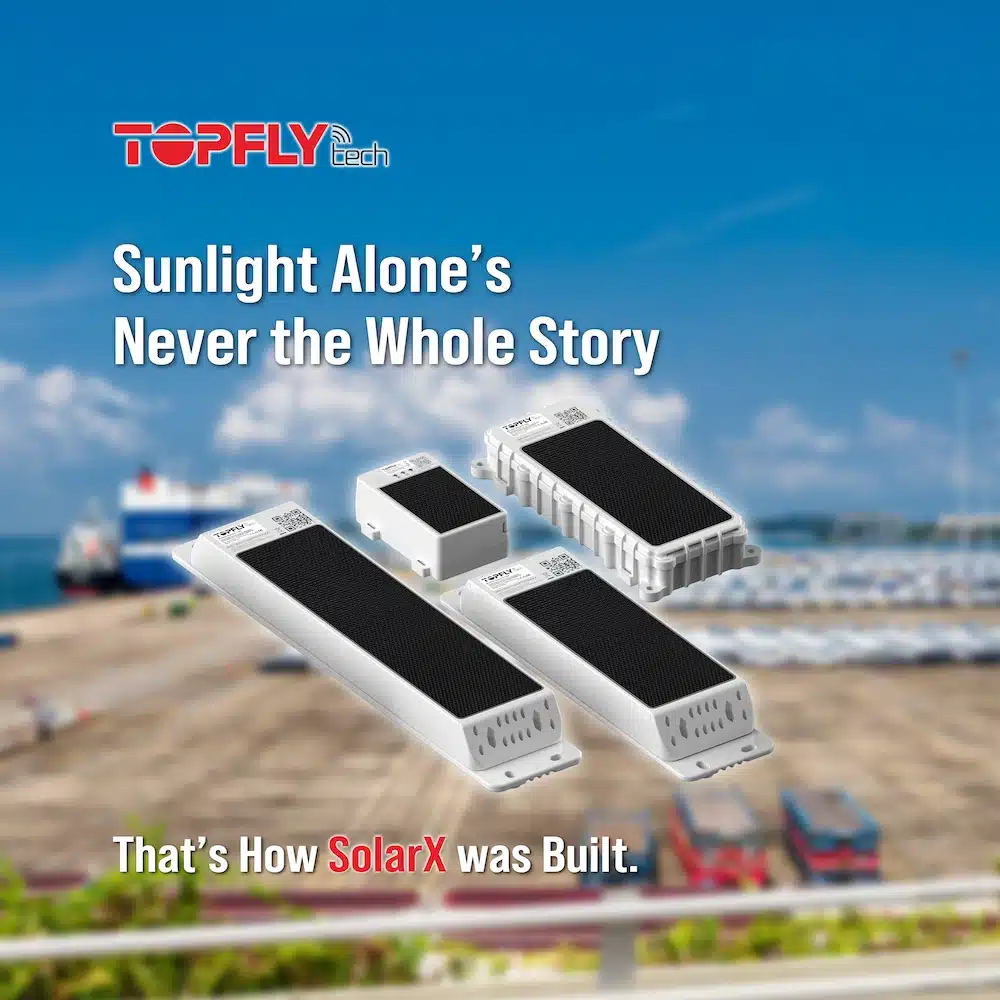
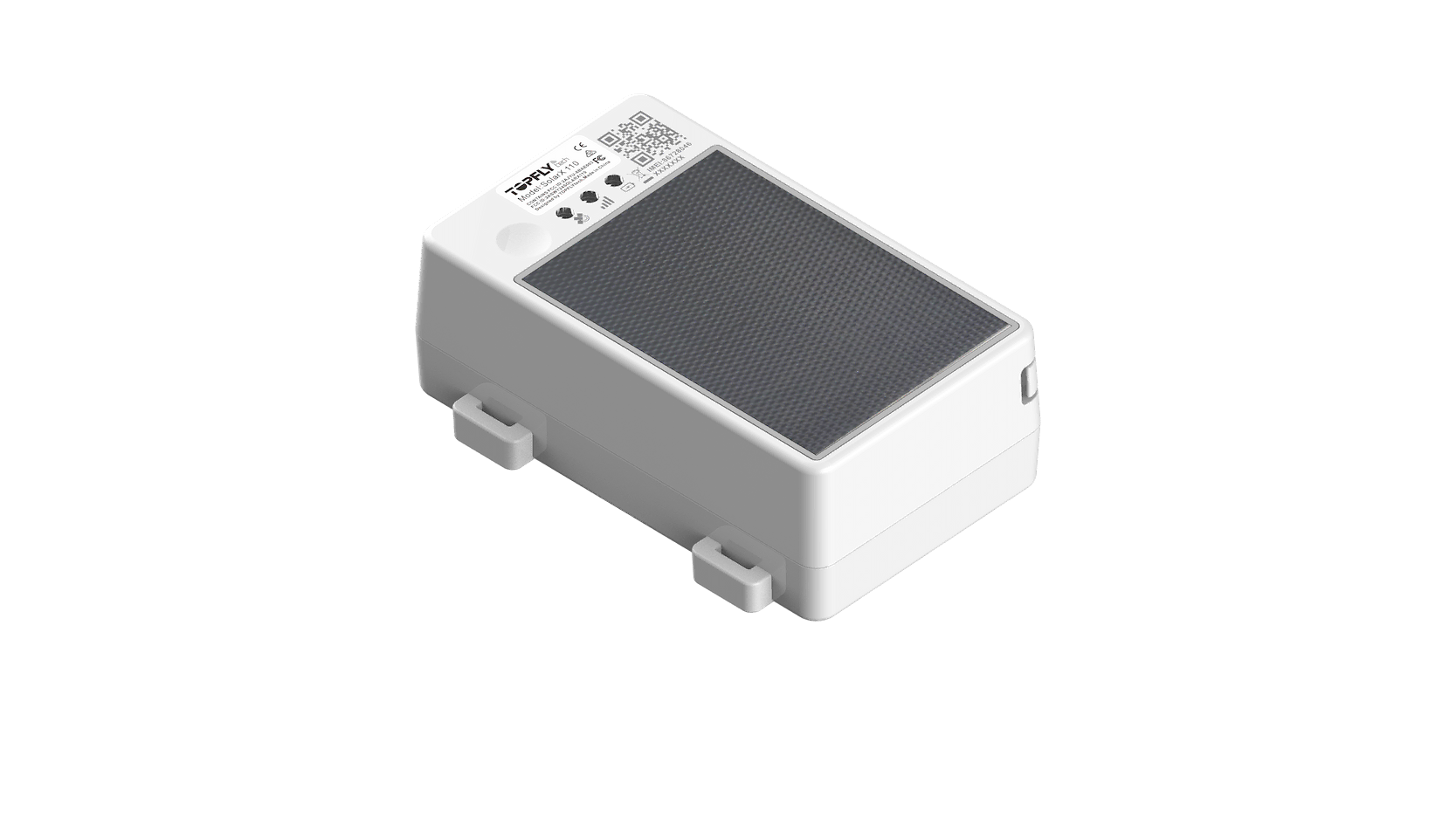
TOPFLYtech’s SolarX and SolarGuardX product families cover a range of off-grid asset tracking applications, from lightweight trailer tracking to industrial equipment monitoring in remote infrastructure environments. The SolarX 110 and SolarX 310 models handle standard trailer, container, and construction equipment tracking on 4G Cat-1 and Cat-M1 networks respectively — the Cat-M1 variant being more relevant for operations spanning areas with variable coverage.
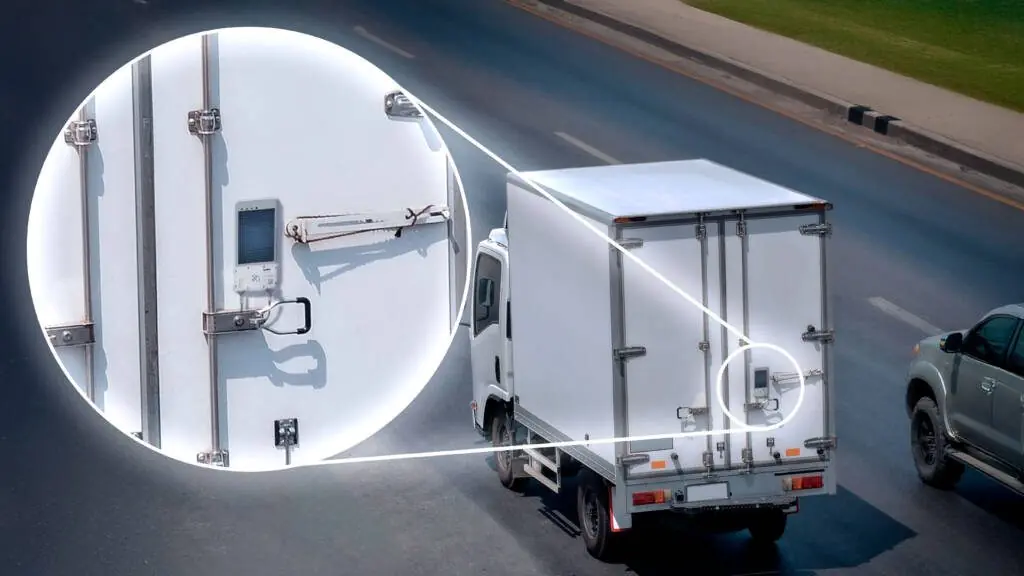
The SolarGuardX series adds functionality beyond location tracking. It integrates an electronic smart lock, enabling remote lock/unlock operations with tamper alerts — relevant for intermodal container security where customs-seal integrity and cargo access control are operational requirements. Plus, it supports BLE sensor connectivity, allowing temperature and humidity data from external sensors to be transmitted through the same tracker — a configuration used in pharmaceutical, food, and chemical logistics where environmental monitoring is as important as location data. For a broader view of cold chain visibility, see the cold chain monitoring solution page.
For operations in genuinely remote environments — oil field equipment, mining machinery, long-term infrastructure monitoring — the SolarGuardX 200 provides a higher-capacity solar system with multi-sensor input support suited to extended deployments with minimal physical access.
The hardware value is realized through the software platform and alert configuration. API and MQTT/HTTP protocol support means integration with existing enterprise systems is technically feasible, but integration work requires scoping against your specific platform environment.
Making the case internally
For equipment managers trying to justify the investment to finance or operations leadership, the ROI framing needs to be grounded in your actual numbers rather than industry averages. The variables worth quantifying: current average response time when an asset goes missing or moves unexpectedly; number of battery-related gaps in tracking data over the past year and their operational consequences; cost of emergency equipment rental when assets were unavailable due to theft or unplanned movement; current administrative overhead for physical battery replacement visits across your tracker fleet.
Solar-powered trackers remove the power maintenance variable from the equation and provide the continuous coverage that makes real-time alerts operationally meaningful. For fleets where assets regularly sit stationary for weeks in locations that aren’t easily visited, the solar architecture isn’t a premium feature — it’s a prerequisite for the tracking system to work as intended. Get in touch if you want to discuss deployment requirements for your specific equipment types.