Battery life calculators are useful — but only when the device behaves like the calculator expects. Many IoT trackers do not. They wake up on motion, reconnect when signal quality changes, retransmit after communication failures, and burn power in short bursts that simple average-current formulas flatten into something that looks precise on paper but drifts badly in the field.
That is why the real problem is usually not bad arithmetic. It is bad assumptions. If the tracker’s real behavior is event-driven, environment-driven, and network-driven, a static calculator can only provide a rough starting point, not a reliable deployment answer.
Why Generic Battery Life Calculators Drift So Quickly
Most generic battery calculators assume that current draw is stable and predictable across time. Real IoT trackers rarely behave that way. Instead, their power profile is shaped by a combination of:
- reporting frequency and how often the device is asked to wake up,
- network conditions that change transmission effort and attachment time,
- movement and event logic such as vibration, geofence changes, or alarm triggers,
- temperature and environment that affect usable capacity and battery aging.
That means two trackers with the same nominal battery capacity can deliver very different field lifetimes if their wake-up logic, signal conditions, or deployment patterns are different.
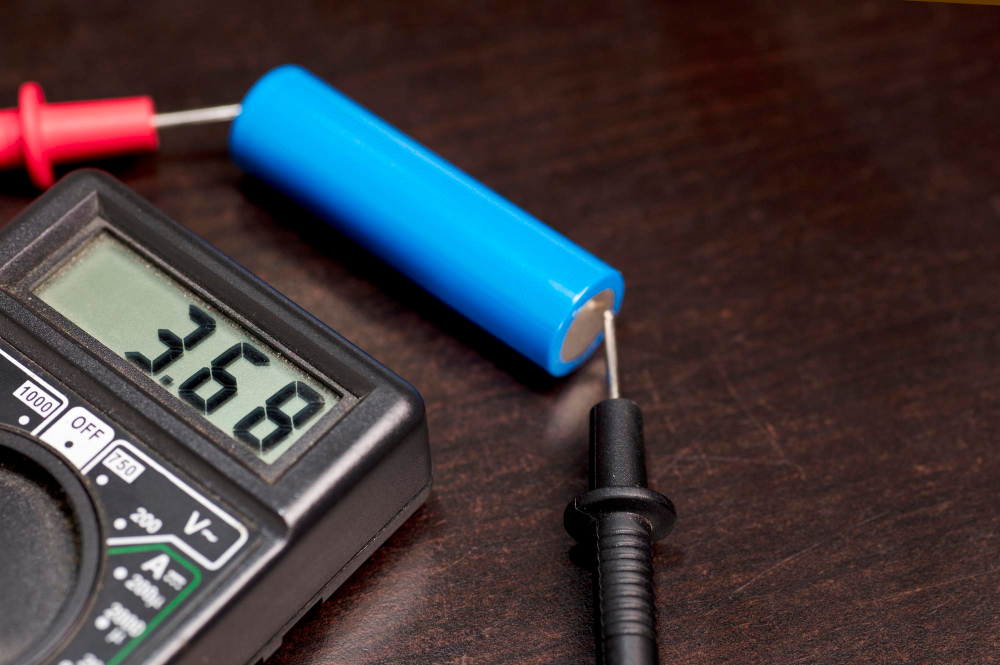
Battery Capacity Alone Does Not Answer the Real Question
Buyers often start with mAh because it is easy to compare. But battery capacity only tells you how much energy is stored. It does not tell you how that energy will actually be consumed in the workflow you are deploying.
For example:
- a stationary asset with one check-in per day behaves very differently from moving cargo with frequent event triggers,
- a tracker in a cold chain environment can consume energy differently from one in an urban delivery workflow,
- a low-signal installation may burn more power on communication than a cleaner radio environment.
So the better planning question is not “How big is the battery?” It is “What operating behavior will this tracker need to survive in the real field environment?”
Where Calculators Still Help — and Where They Need Validation
A calculator is still useful as a planning tool. It can help compare rough reporting strategies, estimate the effect of heavier check-in intervals, or frame early expectations. But it becomes dangerous when teams treat the output like a guaranteed operating result.
That is why tools such as TOPFLYtech’s Battery Life Calculator and Battery Life Test should be used together with deployment logic and field assumptions, not as a substitute for them.
A calculation is the model. A battery life test is the reality check.
What Buyers Should Evaluate Before Trusting a Battery Estimate
Before accepting a battery-life number, buyers should usually pressure-test at least four inputs:
- how often the device reports under normal conditions,
- which events can force extra wake-ups,
- what temperature and signal conditions the deployment will face,
- whether the asset is mostly stationary, mostly moving, or highly irregular.
If these inputs are vague, the battery estimate is usually optimistic by definition.
Why This Matters Across Different Tracker Categories
Battery behavior should also be judged in context of the device category. A battery-powered personal or parcel tracker has a different power story from a solar asset tracker or a covert long-life asset tracker.
- Battery-powered asset trackers need careful modeling around reporting intervals, wake logic, and maintenance expectations.
- Solar-powered asset trackers shift the conversation from static reserve capacity to charging conditions, idle periods, and power management.
- Personal or mobile safety trackers often need a balance between responsiveness and endurance that a generic formula oversimplifies.
This is why it helps to compare the calculator output against the actual deployment path — for example the broader Solar Powered Asset Tracker category or battery-sensitive use cases such as KnightX, Real-Time Tracking for Active Operations.
The Practical Takeaway
Battery life calculators fail when they are asked to predict a real deployment from abstract averages alone. The more variable the workflow, the more dangerous the false certainty becomes.
Used correctly, a calculator helps frame the question. Used blindly, it hides the very behaviors that dominate battery life in practice.
Next Step for Teams Planning Long-Life Tracking
If you need a first-pass estimate, start with the Battery Life Calculator. If you want a more grounded benchmark, review the Battery Life Test. If the deployment is solar-driven, continue to Solar Powered Asset Tracker. And if you want help translating your real reporting pattern into a more credible battery expectation, contact TOPFLYtech for a scenario-specific discussion.