Cold chain teams do not have a data problem anymore. They have a decision problem. There are more devices, more sensors, and more dashboards than ever—but the real question is still simple: what level of visibility is actually needed for this shipment workflow?
For some lanes, a basic logger may be enough. For others, the operation needs real-time temperature alerts, door-status evidence, and exception handling while the cargo is still moving. And in between those two extremes, BLE sensor-based setups are becoming a practical middle path for teams that want more than a passive record without jumping straight into a heavy monitoring architecture.
Why this choice matters more now
Cold chain visibility is no longer only about proving what happened after a claim. Buyers increasingly need to prevent spoilage, reduce exception-handling time, and show stronger control over chain-of-custody events. This shift is also reflected in pharmaceutical distribution standards, where maintaining strict temperature control is essential to ensure product safety, as highlighted in WHO cold chain guidelines. That is why many teams are rethinking the gap between three common approaches:
- Standalone logger — useful for historical records and after-the-fact evidence
- BLE sensor setup — useful when a tracker needs to collect richer environmental or door-event data nearby
- Real-time visibility stack — useful when live alerts and operational intervention matter
The best option depends less on the device itself and more on the cost of delay, excursion, or dispute in the shipment workflow.
When a standalone logger is enough
A standalone temperature logger can still be the right answer when the main business need is to keep a shipment record for later review. This approach often fits operations where teams mainly need post-trip documentation rather than real-time action.
- the route is stable and low-risk
- the shipment value is moderate
- the business mainly needs audit evidence after delivery
- there is no operational team available to act on live alerts anyway
In those cases, simplicity matters. A logger can be cost-effective and operationally easy. But the tradeoff is obvious: if temperature goes out of range mid-route, the team may not know until the cargo is already compromised.
Where BLE sensors add more value
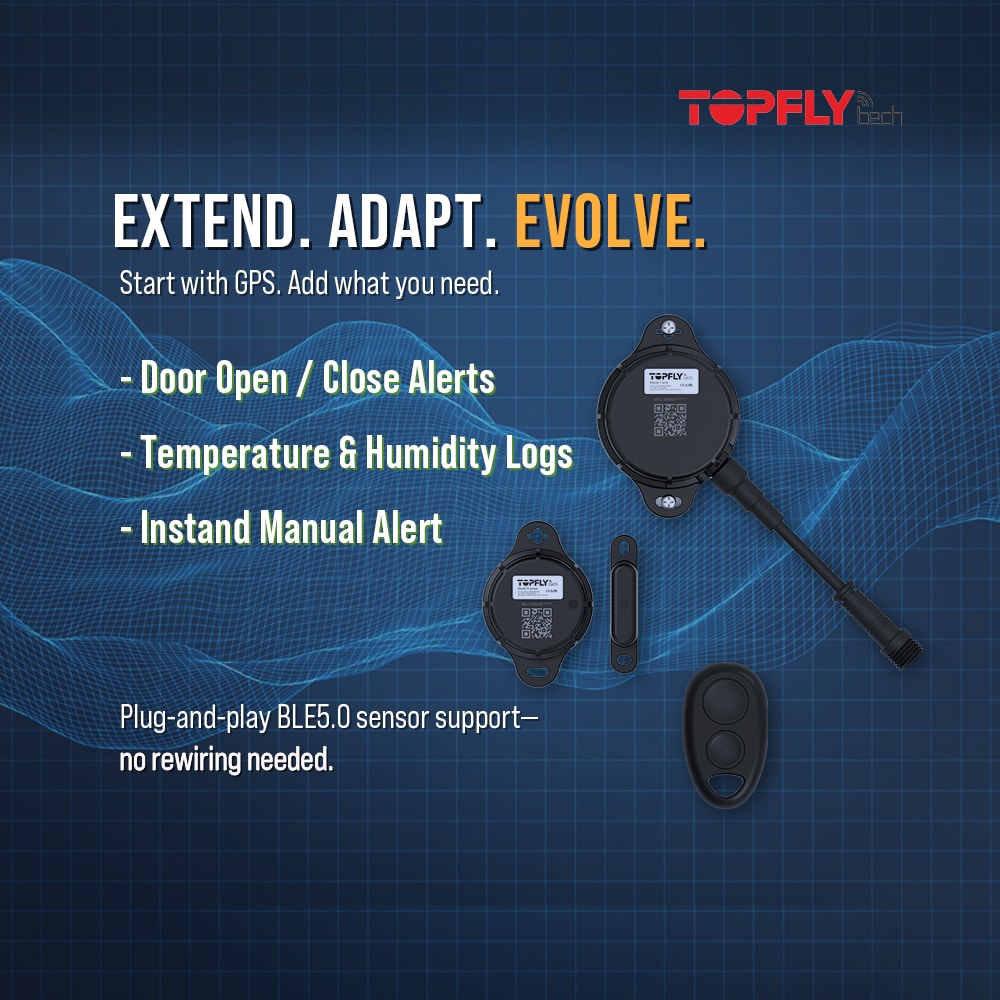
This is where BLE-based monitoring becomes much more interesting. A BLE sensor can give the main tracker local environmental and event data without forcing every shipment into a fully standalone real-time sensor architecture. It is often a better fit when the operation needs more context, but not necessarily a separate high-cost device on every shipment unit.
For example, a setup built around TOPFLYtech’s temperature and humidity visibility workflow can combine location and sensor logic more naturally than a passive logger alone. Buyers looking at door-related risk can also evaluate temperature + door status monitoring when knowing when the cargo was opened matters almost as much as the temperature reading itself.
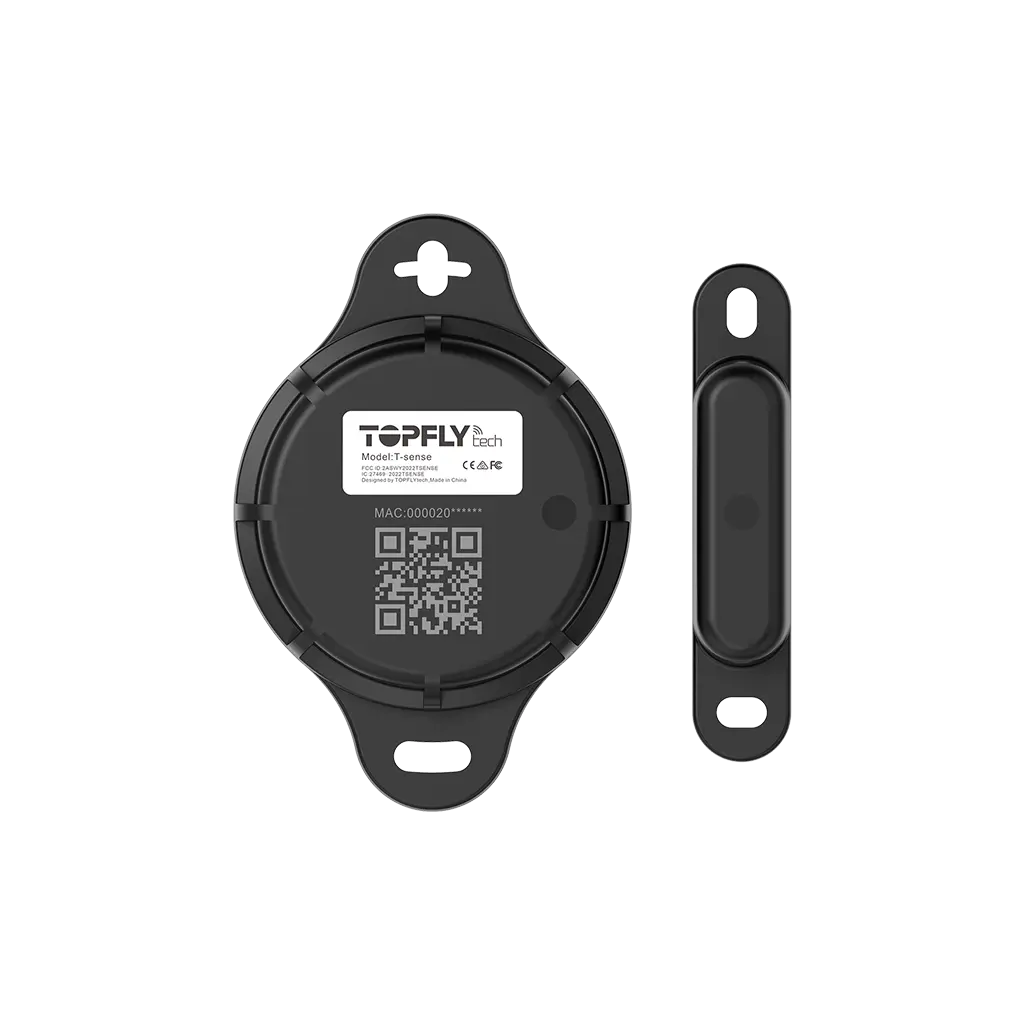
BLE sensors make the most sense when the business needs one or more of these capabilities:
- temperature and humidity data tied to a moving asset
- door-open / close evidence for reefer, container, or van workflows
- a lighter deployment path than a fully separate active monitoring stack
- modular expansion across multiple shipment profiles
They are especially useful when the team wants a better operational signal, but still values installation flexibility and lower hardware complexity.
When real-time visibility becomes necessary in cold chain monitoring
Real-time visibility is the right choice when waiting until delivery is too late. If a temperature excursion, unplanned door opening, or reefer issue can trigger major financial loss, claim exposure, or compliance failure, then passive logging is usually not enough.
That is the point where buyers should move toward a more complete cold chain monitoring solution rather than treating temperature data as a standalone accessory.
- high-value pharma or clinical cargo
- shipments with strict excursion thresholds
- operations that need live intervention
- routes with multiple handoffs or security risk
- customers requiring provable chain-of-custody control
In these scenarios, the question is no longer “Can we capture data?” It becomes “Can we act before the loss happens?”
How buyers should decide for Cold Chain
A practical way to decide between these three models is to work backward from the operational consequence of missing an event.
- If you only need historical proof, start with a logger.
- If you need richer condition data tied to tracked assets, evaluate BLE sensors.
- If you need alerts and intervention before delivery, move to real-time visibility.
Then pressure-test the choice with five questions:
- How expensive is one undetected excursion on this lane?
- Does the operation need temperature only, or temperature plus door and chain-of-custody context?
- Who will respond when a live alert appears?
- How often are shipments moving through mixed custody points?
- Is this a pilot lane, or a workflow that will scale across the business?
If the answers point toward faster intervention, richer evidence, and more accountability, the buying decision usually moves away from passive logging and toward a tracker-plus-sensor model.
Start with the workflow, not the gadget list
The most common buying mistake is comparing devices without first deciding what the business needs to prevent. A logger, a BLE sensor, and a real-time visibility setup are not interchangeable. They solve different levels of risk.
Need help choosing the right cold chain monitoring solution model? Start with the workflow: lane risk, response speed, custody complexity, and proof requirements. Then match that to the right TOPFLYtech solution path—from sensor-based monitoring to full cold chain visibility.