In fleet operations, every second matters. Whether a driver needs quick route clarification, a dispatcher wants to coordinate tasks, or a field team needs instant updates, communication speed can directly affect operational efficiency and safety.
Traditional phone calls are not always the most practical solution on the road. Drivers may miss calls, dispatchers may need to contact multiple team members, and long communication chains can slow down decision-making. That is why Push-to-Talk communication is becoming an important feature for modern fleet management.
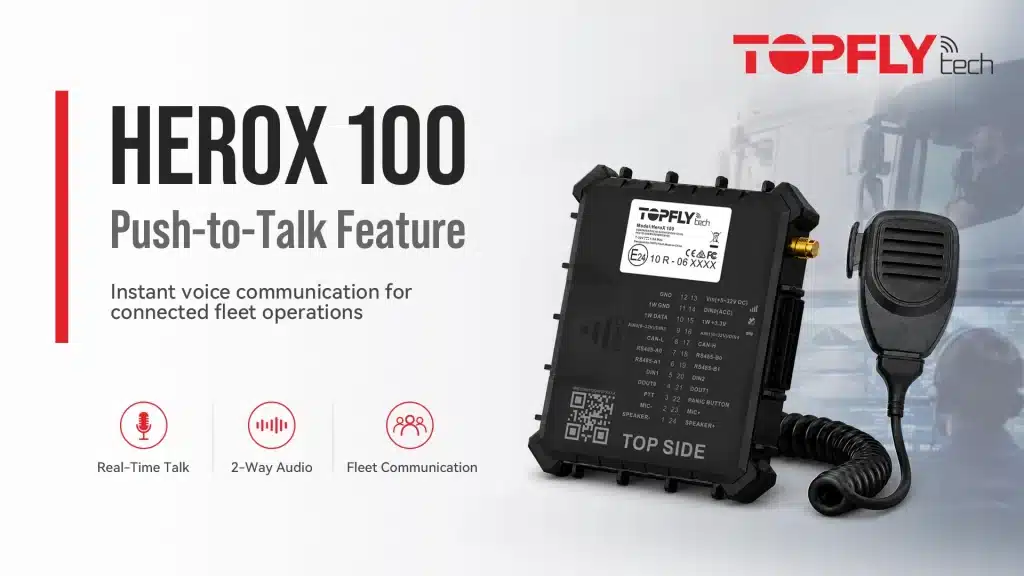
The Push-to-Talk walkie-talkie currently works with HeroX 100, helping fleet teams improve communication between drivers and dispatchers.
What Is Push-to-Talk?
Push-to-Talk, often known as PTT, allows users to communicate instantly by pressing a button. Instead of dialing a phone number or waiting for a call to connect, users can send voice messages in real time, similar to a walkie-talkie experience.
Push-to-Talk communication has also evolved beyond traditional two-way radio systems. In modern communication standards, Mission Critical Push-to-Talk has been defined by 3GPP as a standardized service for real-time voice communication. While commercial fleet communication is different from public safety communication, many of the same principles remain relevant, including instant voice access, group-based communication, and reliable coordination between users.
For fleet operators, these principles can help improve the way drivers, dispatchers, and field teams exchange time-sensitive information during daily operations.
For fleet operators, this means drivers and dispatchers can stay connected with less delay and fewer distractions.
Why Push-to-Talk Matters for Fleet Management
Fleet communication is not just about talking. It is about making sure the right information reaches the right person at the right moment.
In daily operations, drivers may need to report traffic conditions, delivery delays, route changes, emergency situations, or task updates. Dispatchers may also need to give instructions quickly without starting multiple separate phone calls.
With Push-to-Talk, teams can simplify these communication moments and reduce unnecessary back-and-forth.
To see how Push-to-Talk works in a real fleet communication scenario, watch our latest introduction video on LinkedIn.
Key Benefits of HeroX 100 Push-to-Talk
1. Faster Communication Between Drivers and Dispatchers
Push-to-Talk helps drivers and dispatch teams communicate instantly. By pressing a button, drivers can send voice updates without going through the traditional call process.
This can be especially useful when quick instructions are needed, such as confirming a route, updating a delivery status, or responding to a sudden change on the road.
2. Improved Operational Efficiency
In fleet management, small delays can become big problems. A missed phone call or delayed message may affect delivery schedules, customer service, and resource planning.
The walkie-talkie is designed to help teams reduce communication delays and improve coordination across vehicles and field operations.
3. Better Team Coordination
Fleet teams often involve multiple roles, including drivers, dispatchers, supervisors, and field staff. Push-to-Talk can support group-based communication, allowing teams to share updates more efficiently.
Instead of contacting each person one by one, dispatchers can communicate with relevant team members more directly, helping everyone stay aligned.
4. A More Practical Alternative to Traditional Calls
Phone calls are useful, but they are not always ideal for fleet scenarios. Drivers may need quick, short communication rather than long conversations.
Push-to-Talk provides a more practical way to exchange brief but important voice messages. It keeps communication simple, direct, and focused.
5. Support for Safer Driving Workflows
Clear and efficient communication can also support safer driving behavior. When drivers can receive or send short voice updates more conveniently, they may spend less time handling complicated communication processes.
For fleet operators, this helps create a more organized communication workflow between the office and vehicles on the road.
Designed for Modern Fleet Communication
As fleets become more connected, communication tools need to evolve as well. Vehicle tracking and telematics are no longer only about location data. They are also about improving visibility, coordination, and response speed.
HeroX 100 is being developed with this connected fleet environment in mind. Its Push-to-Talk feature adds another layer of communication support, helping fleet teams move from passive tracking to more active coordination.
Use Cases for HeroX 100 + Push-to-Talk
The combiniation can be useful in many fleet scenarios, including:
- Delivery and logistics coordination
- Field service operations
- Route change communication
- Driver-to-dispatch updates
- Emergency or urgent notifications
- Team-based task management
- Long-distance fleet operations
For companies managing multiple vehicles and mobile workers, Push-to-Talk can help make communication faster, clearer, and easier to manage.
Moving Toward More Connected Fleet Operations
Fleet management is no longer just about knowing where vehicles are. It is about understanding what is happening, responding faster, and keeping teams connected throughout the entire operation.
With Push-to-Talk, HeroX 100 is designed to help fleet operators improve communication efficiency and strengthen coordination between drivers and dispatch teams.
As TOPFLYtech continues to develop solutions for connected fleet management, HeroX 100 represents another step toward smarter, more responsive, and more practical fleet communication.
Conclusion
Push-to-Talk may seem like a simple feature, but in real fleet operations, simple tools often create the biggest improvements.
By enabling faster voice communication, supporting team coordination, and reducing communication delays, HeroX 100 Push-to-Talk can help fleet operators manage daily operations more efficiently.
For businesses looking to improve communication between drivers and dispatchers, HeroX 100 is a solution worth watching.