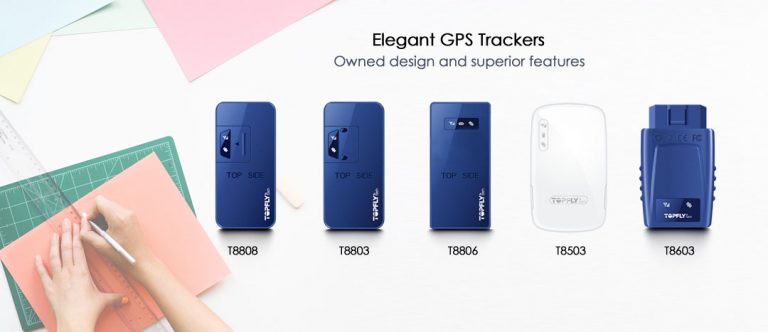
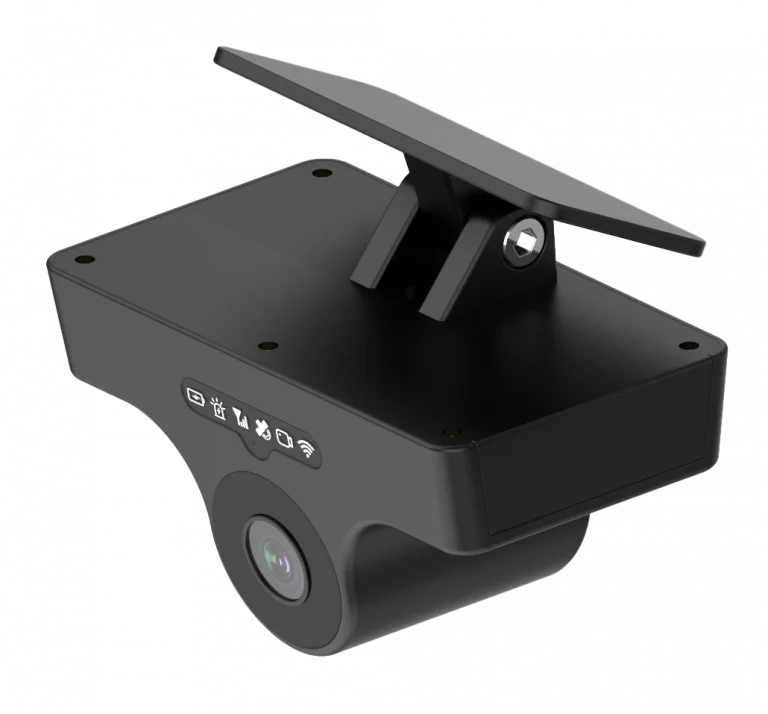
As fleet managers and logistics operators modernize their tracking systems, one critical decision stands out: which cellular connectivity technology is right for your fleet? With LTE-M, NB-IoT, and 4G CAT-1 all vying for attention in the IoT tracking space, making the wrong choice can lead to coverage gaps, excessive costs, or premature device failures.

At TOPFLYtech, we’ve deployed over 500,000 tracking devices across 60+ countries, giving us unique insight into what works—and what doesn’t—in real-world fleet operations. In this comprehensive guide, we’ll break down the technical and practical differences between these three technologies to help you make an informed decision.
Quick Comparison: LTE-M vs NB-IoT vs 4G CAT-1
| Feature | LTE-M (Cat-M1) | NB-IoT (Cat-NB1) | 4G CAT-1 |
|---|---|---|---|
| Data Rate | Up to 1 Mbps | Up to 250 Kbps | Up to 10 Mbps |
| Battery Life | 5-10 years | 10+ years | 1-3 years |
| Coverage | Good urban/rural | Excellent deep indoor | Standard 4G coverage |
| Latency | 10-15 ms | 1.5-10 seconds | <50 ms |
| Cost per Device | $$ | $ | $$$ |
| Mobility Support | Excellent | Limited | Excellent |
Understanding the Technologies
1. LTE-M (Long-Term Evolution for Machines)
LTE-M, also known as Cat-M1, was specifically designed for IoT applications that require mobility and moderate data rates. It operates on existing LTE networks but with optimized power consumption and extended coverage.
Best For:
- Moving vehicles that cross cell towers frequently
- Applications requiring firmware updates over-the-air (FOTA)
- Mixed data types (GPS location + sensor data + alerts)
- Regions with strong LTE-M carrier support (AT&T, Verizon, Vodafone)
TOPFLYtech Application: Our TLW2 series with LTE-M connectivity is ideal for cross-border logistics fleets that need reliable tracking across multiple countries with varying network conditions.
2. NB-IoT (Narrowband IoT)
NB-IoT focuses on ultra-low power consumption and deep coverage, making it perfect for stationary or slow-moving assets. It sacrifices data speed and mobility for exceptional battery life.
Best For:
- Stationary assets (containers, equipment, trailers)
- Deep indoor locations (warehouses, underground parking)
- Applications sending small, infrequent data packets
- Regions where NB-IoT has strong carrier deployment (China, Europe)
TOPFLYtech Application: Our container tracking solutions often use NB-IoT for monitoring shipping containers that may sit for weeks without movement but need multi-year battery life.
3. 4G CAT-1
4G CAT-1 represents the mainstream IoT connectivity option, offering a balance of data speed, latency, and power consumption. It’s essentially a simplified version of standard 4G LTE.
Best For:
- Applications requiring higher data throughput (video, rich telematics)
- Real-time tracking with sub-second updates
- Regions where LTE-M/NB-IoT coverage is limited
- Fleets already operating on standard 4G networks
TOPFLYtech Application: Our PioneerX series with 4G CAT-1 connectivity supports advanced features like driver behavior monitoring and accident reconstruction that require more frequent data transmission.
Decision Framework: 5 Key Questions to Ask
1. How mobile are your assets?
Highly mobile (vehicles): LTE-M or 4G CAT-1
Mostly stationary: NB-IoT
Mixed fleet: Consider multi-mode devices that support all three technologies.
2. What’s your expected battery life requirement?
3+ years without maintenance: NB-IoT
2-5 years with hardwired power: LTE-M
1-3 years or vehicle-powered: 4G CAT-1
3. What data do you need to transmit?
Basic location + alerts: NB-IoT (small packets)
Location + sensor data + FOTA: LTE-M
Rich telematics + video snippets: 4G CAT-1
4. Where will your assets operate?
Check carrier coverage maps:
- AT&T LTE-M Coverage (external source)
- Verizon LTE-M Coverage (external source)
- GSMA IoT Deployment Map (industry source)
5. What’s your total cost of ownership (TCO) target?
Download our Battery Calculator to compare 3-year costs including devices, connectivity, and maintenance.
Real-World Deployment Examples
Case 1: Cross-Border Logistics Fleet
Challenge: A logistics company operating across US, Canada, and Mexico needed reliable tracking with minimal downtime during border crossings.
Solution: TOPFLYtech TLW2-12BL with LTE-M connectivity, providing seamless handoff between AT&T (US), Telus (Canada), and Telcel (Mexico) networks.
Result: 99.8% connectivity uptime and 40% reduction in cellular data costs compared to standard 4G devices.
Case 2: Construction Equipment Rental
Challenge: Equipment sitting on remote job sites for months needed tracking without frequent battery replacement.
Solution: NB-IoT tracking devices with 10-year battery life, transmitting location weekly unless moved.
Result: Zero maintenance visits in 2 years, recovering $250,000 in previously “lost” equipment.
Case 3: High-Security Vehicle Fleet
Challenge: Armored transport company needed real-time tracking with instant alerting and rich telematics.
Solution: PioneerX 100 with 4G CAT-1 connectivity, providing sub-5-second location updates and continuous driver behavior monitoring.
Result: 35% reduction in insurance premiums and 100% recovery rate on attempted thefts.
Future-Proofing Your Decision
With 5G IoT (RedCap) on the horizon and carriers continually evolving their networks, consider:
- Multi-mode devices: TOPFLYtech’s latest generation supports LTE-M + NB-IoT + 4G CAT-1 in a single SKU
- Firmware Over-the-Air (FOTA): Ensure your devices can receive protocol updates as networks evolve
- Carrier certification: Choose devices certified for multiple carriers in your operating regions
Frequently Asked Questions
Q: Can I switch between technologies after deployment?
A: With single-mode devices, switching requires hardware replacement. However, TOPFLYtech’s multi-mode devices (like the TLW2 series) can dynamically select the best available network, and can be reconfigured via FOTA updates to prioritize different technologies as your needs change.
Q: How does weather affect these different technologies?
A: LTE-M and 4G CAT-1 generally maintain better performance in adverse weather due to their higher power transmission. NB-IoT’s signal can be more susceptible to heavy rain or snow, but its deep penetration capabilities often compensate. For extreme environments, we recommend our ruggedized devices with enhanced antennas.
Q: What about 5G? Should I wait for 5G IoT devices?
A: 5G IoT (RedCap) is emerging but won’t replace LTE-M/NB-IoT/CAT-1 for several years. These technologies will coexist, with 5G serving high-bandwidth applications. For most fleet tracking needs, current technologies offer the best balance of coverage, cost, and battery life. Read our IoT trends report for more on 5G timelines.
Q: How do I know which carriers support which technology in my region?
A: We maintain an updated global carrier coverage database based on our deployments in 60+ countries. For specific regions, our sales engineers can provide detailed coverage analysis during the consultation process.
Q: What’s the actual cost difference between these technologies?
A: While NB-IoT modules are cheapest ($5-10 less than LTE-M), the total 3-year TCO often favors LTE-M due to better coverage reducing data retransmission costs. 4G CAT-1 has higher module costs but may be more cost-effective for data-intensive applications. Use our interactive TCO calculator for your specific scenario.
Making the Right Choice for Your Fleet
There’s no one-size-fits-all answer to the LTE-M vs NB-IoT vs 4G CAT-1 question. The right choice depends on your specific:
- Asset mobility patterns (stationary, regional, or cross-border)
- Data requirements (simple location vs rich telematics)
- Operating environment (urban, rural, indoor, extreme weather)
- Total cost of ownership targets
- Future expansion plans
At TOPFLYtech, we’ve found that approximately 60% of fleet applications are best served by LTE-M, 30% by NB-IoT for stationary assets, and 10% by 4G CAT-1 for data-intensive or latency-sensitive applications.
The most future-proof approach? Consider devices that support multiple technologies. Our TLW2 series, for example, combines LTE-M, NB-IoT, and 4G connectivity in a single device, automatically selecting the optimal network based on coverage, cost, and application needs.